
Zen House Restoration
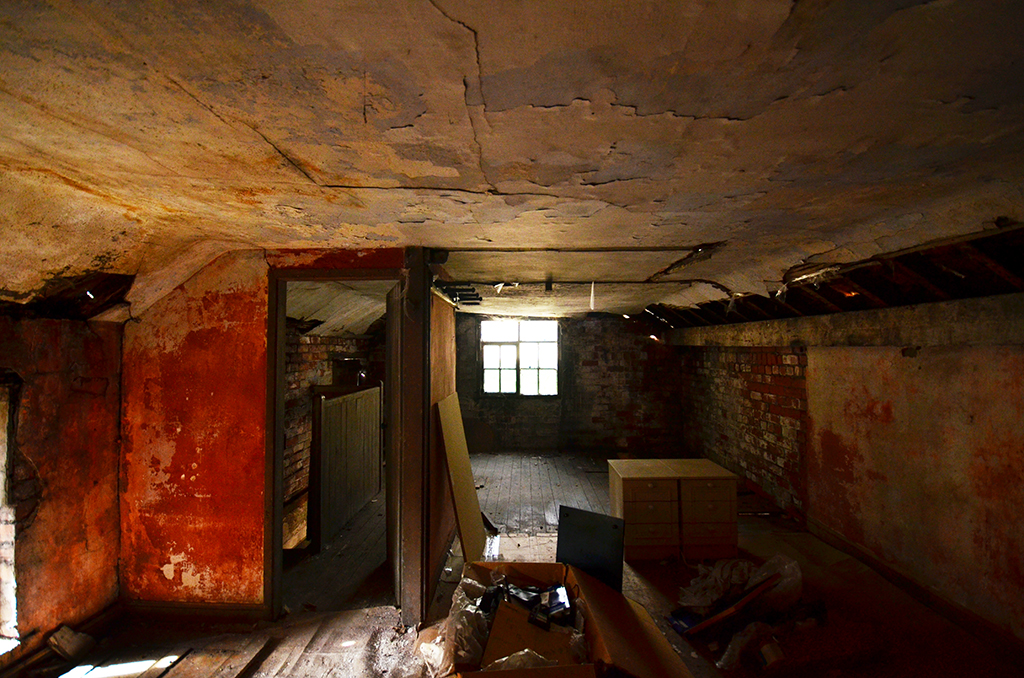
With a big house restoration project, you can usually see the beautiful home it will become.
(WHY DID YOU BUY IT IF YOU DON’T BELIEVE IT CAN BE BEAUTIFUL?)
Everyone else, however, often sees something quite different — a wreck, a disaster, or what one person memorably described to us as “Psycho’s house.” Thanks very much.
Occasionally this makes you doubt your vision, maybe they are right?
We didn’t see a horror film set. We saw a house that needed love.
Still, a few weeks or months in, your faith can wobble. Restoration is hard work, physically and mentally. Dust, decisions, unexpected costs, long lists, and longer waits. It’s very easy to think: Maybe everyone was right. What have we done?
This is the point where you need to get Zen.
The Philosophy Behind Zen House Restoration
Zen House Restoration isn’t about incense or chanting. It’s about attention, patience, and quality – ideas beautifully explored in Zen and the Art of Motorcycle Maintenance. That book isn’t really about motorcycles; it’s about care, about understanding systems properly, and about doing things well rather than quickly.
Houses are much the same.
Zen House Restoration is also has a bit of humour and serendipity as inspired by Dirk Gently’s Holistic Detective Agency, written by Douglas Adams. Dirk’s guiding principle – Zen Navigation – goes like this:
If lost, rather than consulting a map, find someone who looks like they know where they’re going and follow them. It very rarely gets you where you wanted to go, but always where you needed to be.
That sentence alone could save you thousands of pounds and a lot of heartache.
Not Where You Wanted to Go, But Where You Needed to Go
ZEN HOUSE RESTORATION MEANS NOT GOING WHERE YOU WANTED TO GO –BUT WHERE YOU NEEDED TO GO.
When we first moved in, we wanted to knock through the kitchen and put in a new bathroom. What actually happened was very different – and entirely right.
We repaired and restored stained glass windows.
We removed layers of old alarms, cables and switchboards.
We installed a new porch.
We repaired the roof.
Each job revealed the next. The house led; we followed. The kitchen can wait.
In Zen House Restoration, instead of following a person who looks like they know where they’re going, you listen to what the house itself is telling you.
Following Those Who Know (and Listening Properly)
Sometimes, though, you do follow people who clearly know where they’re going – your tradespeople.
A carpenter suggested moving a radiator to the other side of the hall giving us valuable width as it was now hidden behind the door
A roofer found a crate of matching old tiles for the coach house while out one weekend.
A plumber rescued a perfectly matching dining-room door from a skip.
A builder dug up stones from his own garden to make steps that looked as though they’d always been there.
Build relationships with your tradespeople. Listen to them. Respect their craft. They will repay you many times over – often in ways you could never have planned.
Following Threads (and Letting the House Make Introductions)
Zen House Restoration also means following unexpected threads.
Curious about the name Penraevon, we searched for others and discovered many stories but also Penraevon Industrial Estate in Meanwood, home to Hicks & Weatherburn, the oldest paint manufacturer in Leeds – and, as it happens, neighbours to a rather fine bread co-operative.
We chose drawing room paint from Hicks & Weatherburn – Drystone Wall, one of their Yorkshire-landscape-named colours. They mostly supply the trade, so I asked them to recommend a decorator for the exterior.
That’s how we met Gary, who painted the outside of the house. And who also gifted us his very high ladders as he was giving up painting exteriors and thought these would be perfect for us as they are solid as a staircase.
Finding What You’re Meant to Find
We use Zen House Restoration when sourcing furniture too. Instead of hunting for specific objects, we scour eBay, facebook marketplace and charity shops for items listed as “collection only” within ten miles.
What we’ve found so far Ercol chairs mid century coffee table, a 1960s teak sideboard, Twenty old school lab tables,a Victorian chest of drawers, enormous school teak bookcases and so many mirrors
The list keeps growing. Who knows what’s next?
The Point of Restoration
The aim of restoration isn’t perfection.
It’s understanding.
To uncover the building.
To learn from the house.
To learn from the people who work on it.
And occasionally, to follow wherever your crowbar suggests there might be something interesting hiding underneath.
Zen House Restoration.







Love this post…what a great way to approach it x
Cheers Ally it definitely helps you stay calm and focussed